


Sling and
Carrier Types
Choosing a baby carrier can be a confusing business! Make it that bit easier by exploring the options to help you find the best fit for your family.
Modern Fabric-Based Carriers
Fabric carriers rely entirely on the natural tension of wrapped material to securely
hold your baby against your body, offering a beautifully tailored fit.
stretchy Wrap
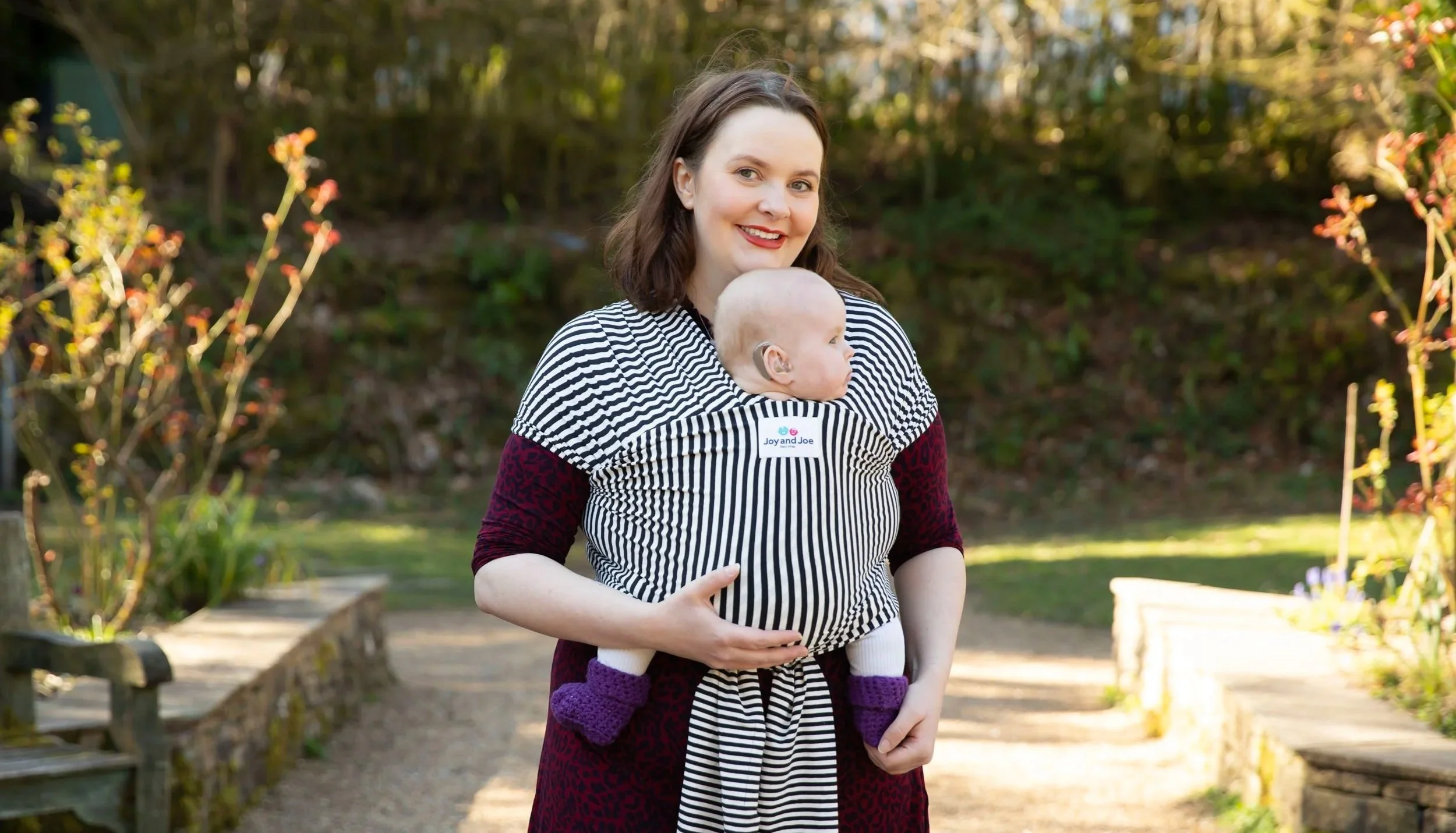
Fabric: Long lengths of soft jersey material that you wrap around yourself and your baby.
Key Features: They make great beginner wraps and are wonderfully comfortable and secure. You tie the wrap entirely onto your body first, and then easily pop the baby in and out without needing to untie the knot. They are ideal for front carries with newborns.
Woven Wraps
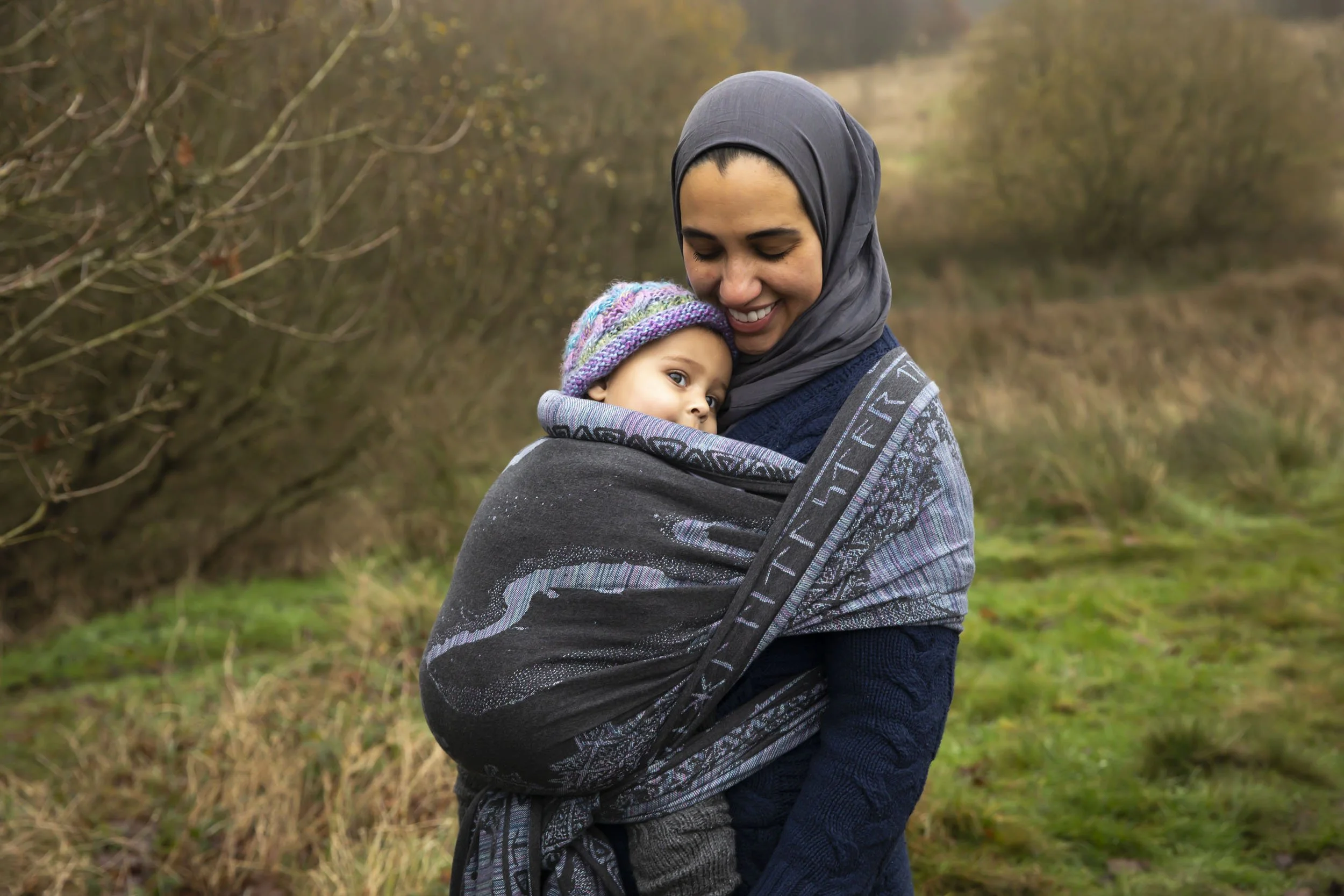
Fabric: Various lengths of sturdy, specially woven material available in an endless variety of designs and sizes depending on the wearer's size or intended carries.
Key Features: Much more sturdy and supportive than stretchy wraps, meaning the fabric will not sag under a heavier child's weight. The right wrap can comfortably see you through from newborn to toddler, and they are suitable for front, hip, and back carries. This type of carrier can have a bit of a steeper learning curve with a number of different wrapping methods, but with a little help and practice, they can be very rewarding and are incredibly versatile.
Ring Slings
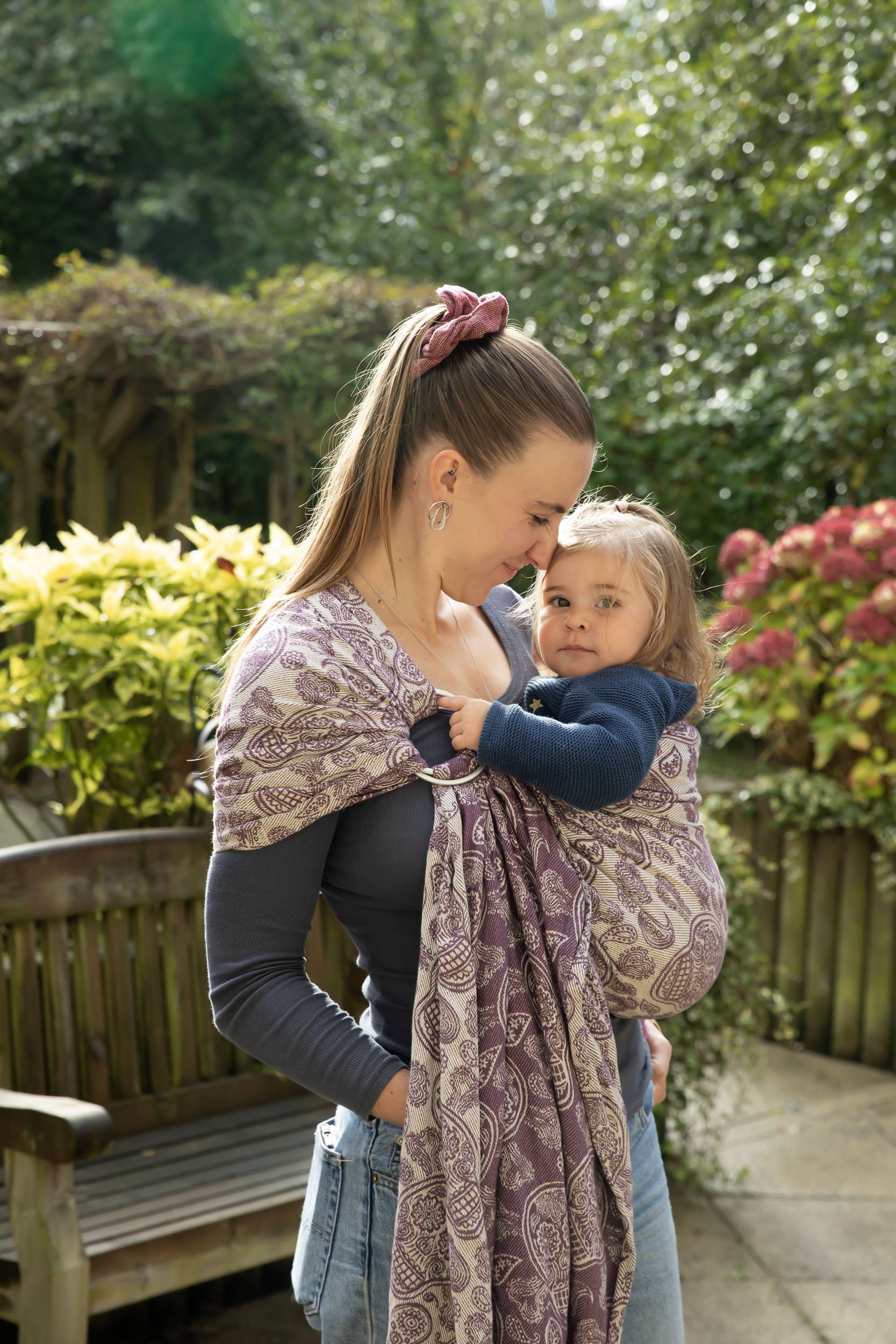
Fabric: A long length of woven material with two safety-tested metal rings securely sewn into one end.
Key Features: They can take a little practice but once you get the hang of them they are extremely quick and easy to get on and off, and fold up small enough to easily fit into a bag. They are worn on just one shoulder, but when fitted right, they are comfortable from birth right through to toddlerhood. They come in an endless range of textiles, are very attractive, and make a great choice for a special occasion, such as a wedding.
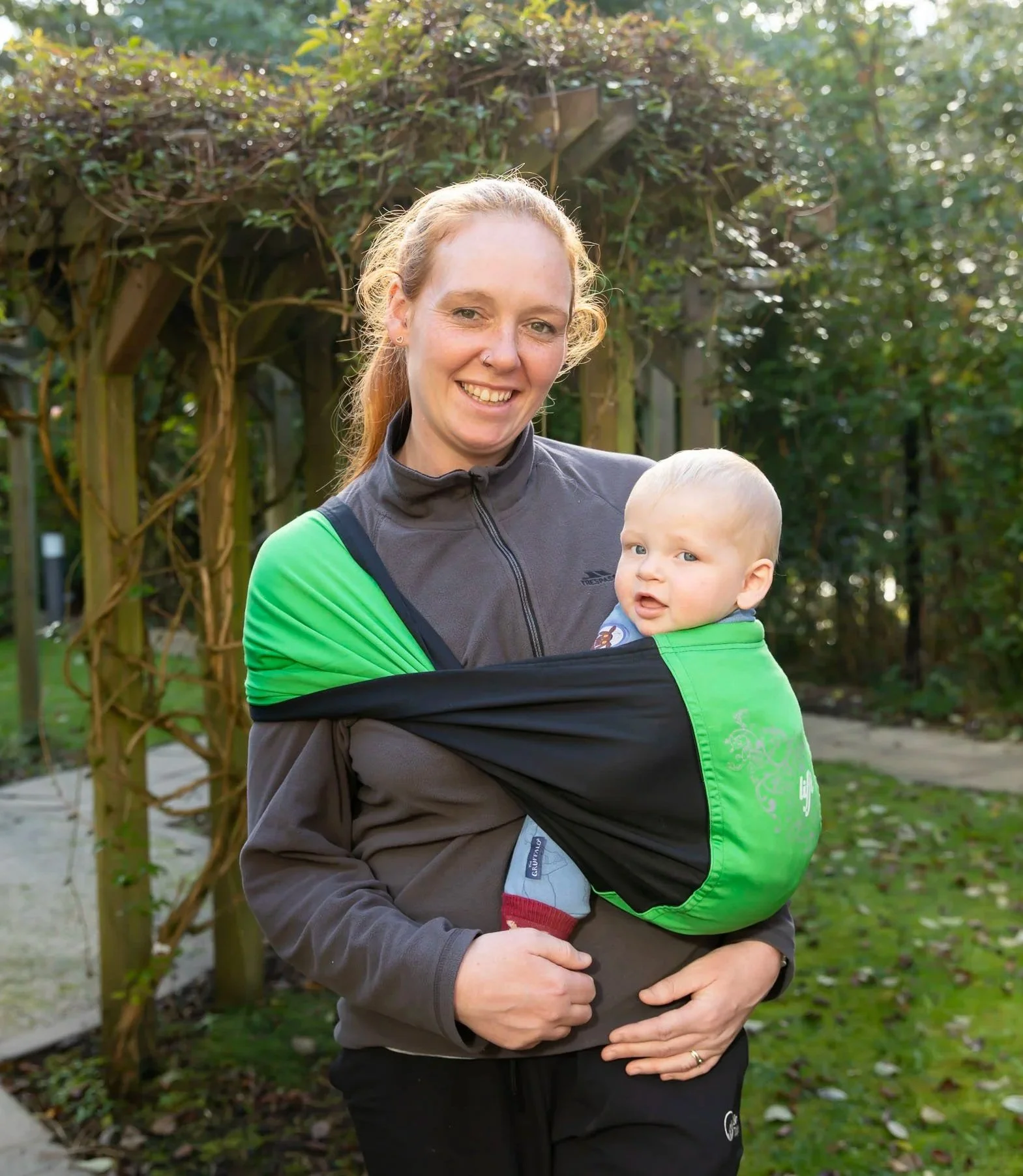
Pouches
Fabric: Non-adjustable, pre-sewn loops or tubes of fabric tailored or sized specifically to the wearer.
Key Features: Like ring slings, they are worn on just one shoulder and offer a quick and easy hip or front carry. They are incredibly simple with no learning curve, you simply slip the band of fabric over your torso and pop the baby in. They also pack down extremely small. However, because they cannot be adjusted, getting the correct size for your body shape is essential for safety and comfort, and they’re not as easily shared between different sized caregivers.
Traditional Asian-Style Carriers
These traditional designs have been used for generations across Asia.
They focus on simplicity, fabric panels, and straps that are tied.
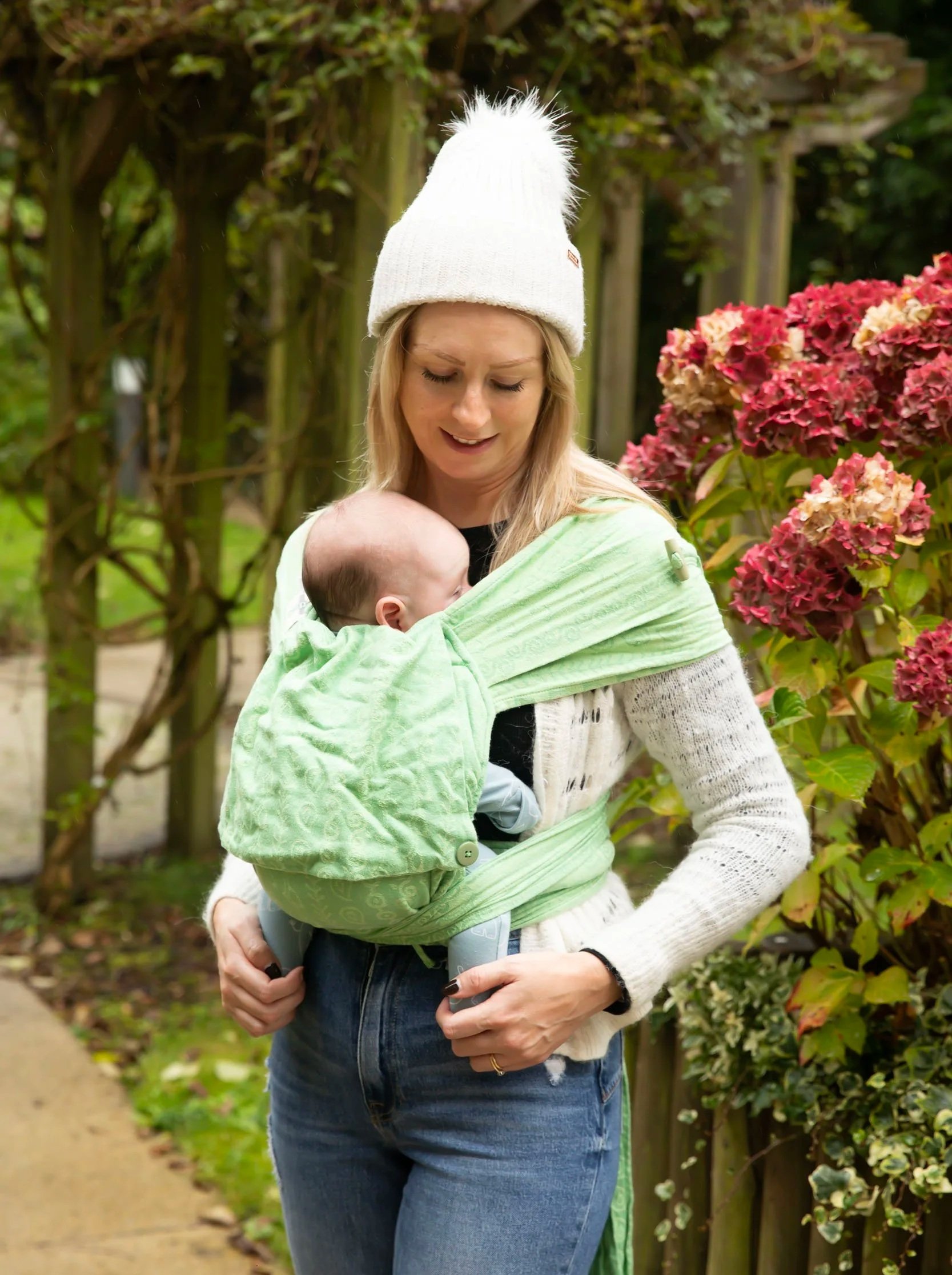
Meh Dai / Bei Dai
Origin: China.
Design: Made up of a shaped fabric body panel with waist straps and longer shoulder straps that wrap around the wearer and baby.
Key Features: They are extremely comfortable for long periods of time and also very versatile, being suitable from newborn to toddler. Depending on the design, they can be used for front, back, and sometimes hip carries.
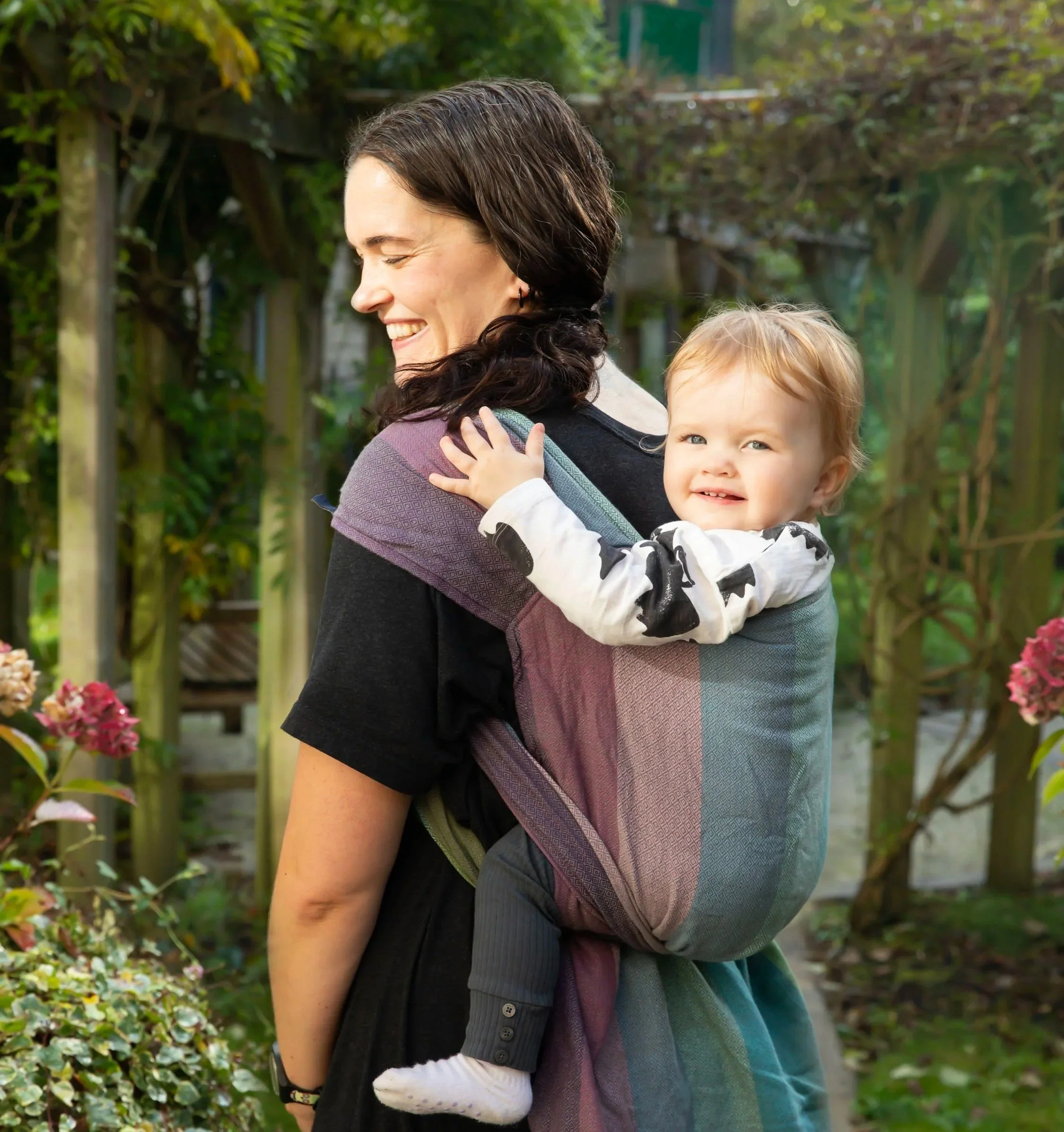
Podaegi
Origin: Korea.
Design: Similar to the Meh Dai but constructed without waist straps. They feature a large, blanket-like fabric panel and a continuous top strap.
Key Features: Traditionally used for high back carries. The wide fabric panel wraps fully around the baby while the long straps secure the child by anchoring across the wearer's body.
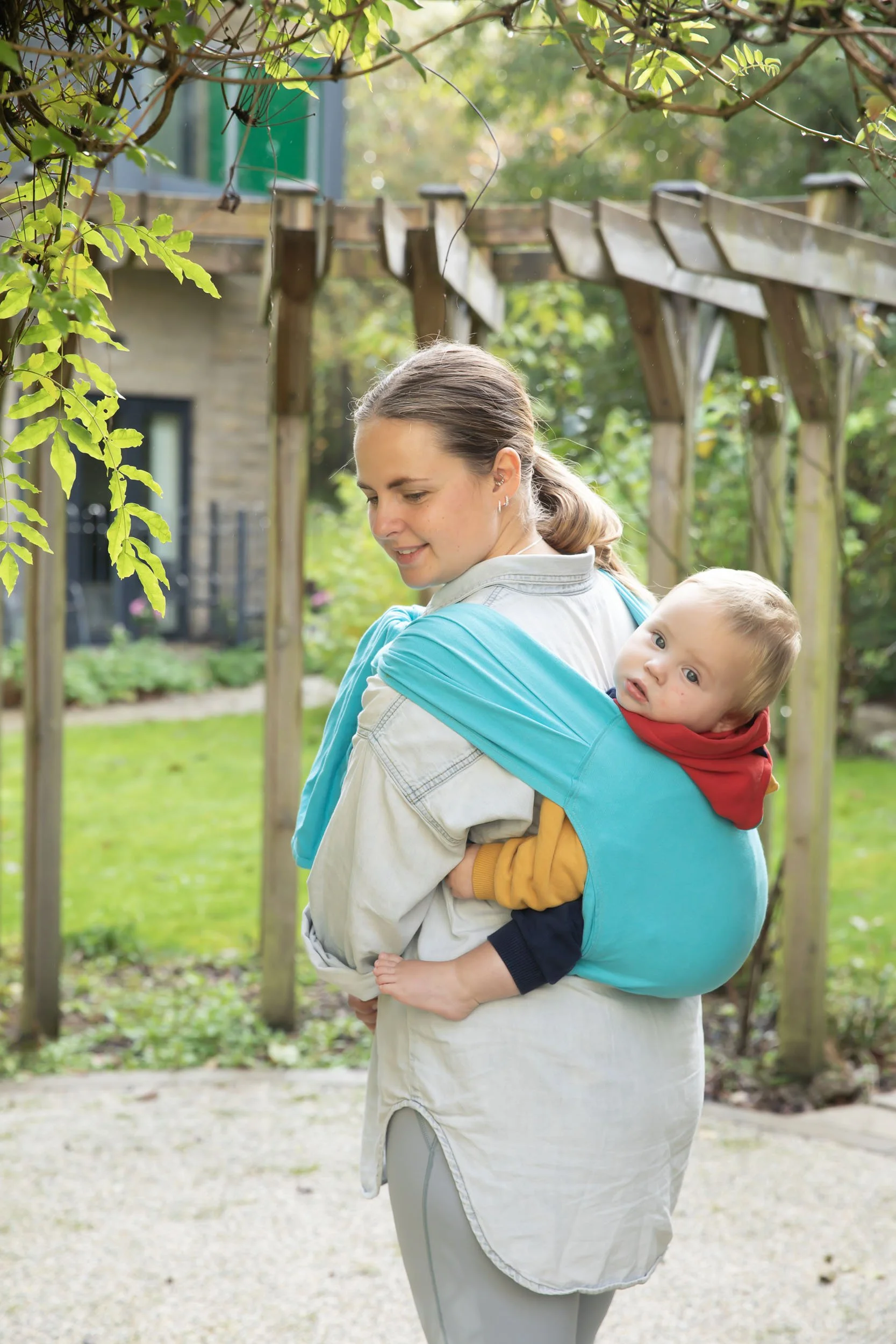
Onbhumio
Origin: Japan.
Design: A panel-based carrier featuring shoulder straps but no waist belt. Traditional versions use rings at the bottom of the body panel that the shoulder straps thread through, while modern versions often swap these out for buckles.
Key Features: Designed specifically for high back carries. Because it leaves your abdomen entirely free of pressure, it’s a great choice for pregnant wearers or anyone who dislikes a tight waist belt riding on their stomach.
Structured and Hybrid Carriers
If you prefer click and go convenience, structured carriers use buckles
and padding to distribute your child's weight.
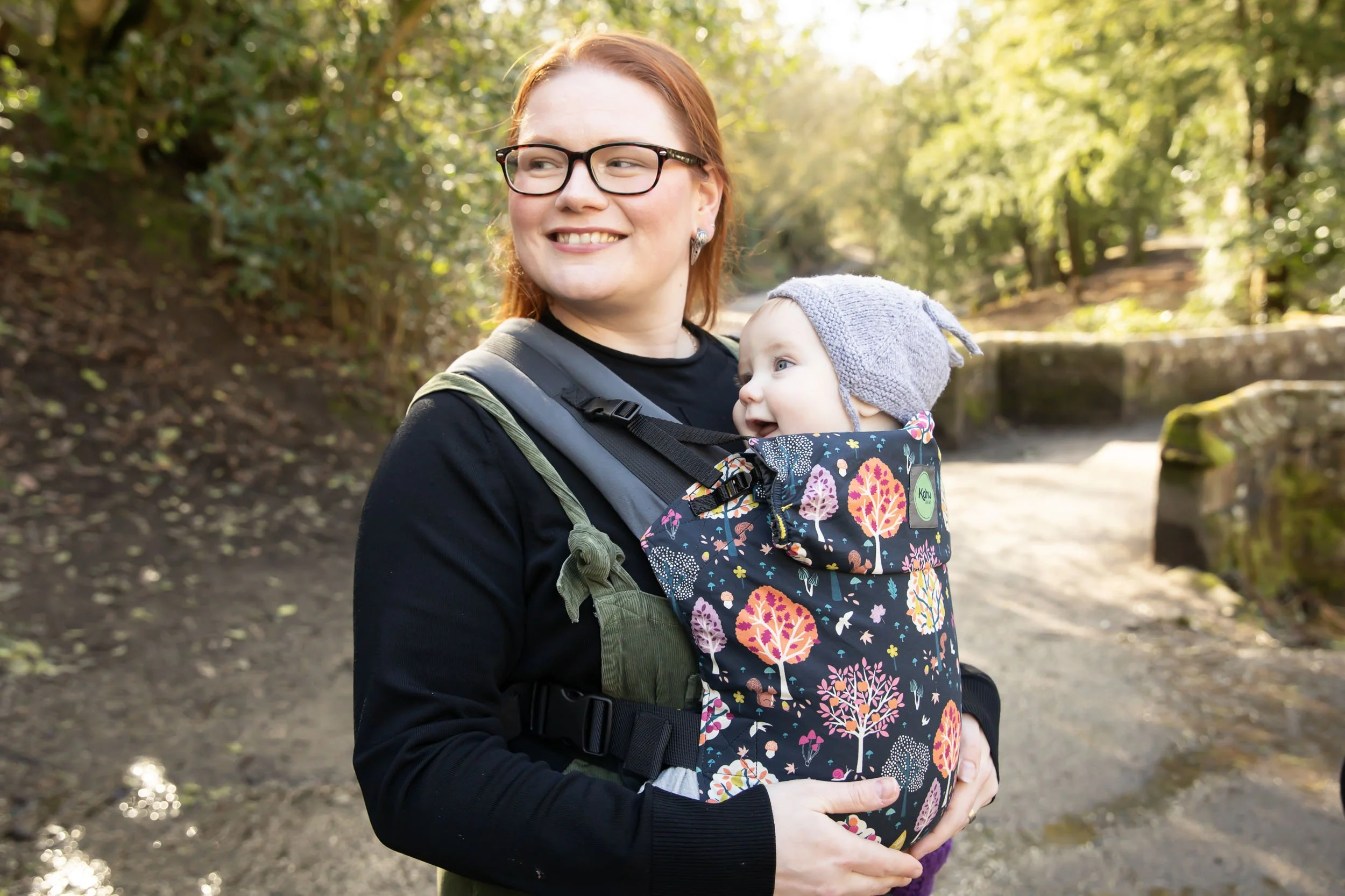
Buckle Carriers (Soft Structured Carriers / SSCs)
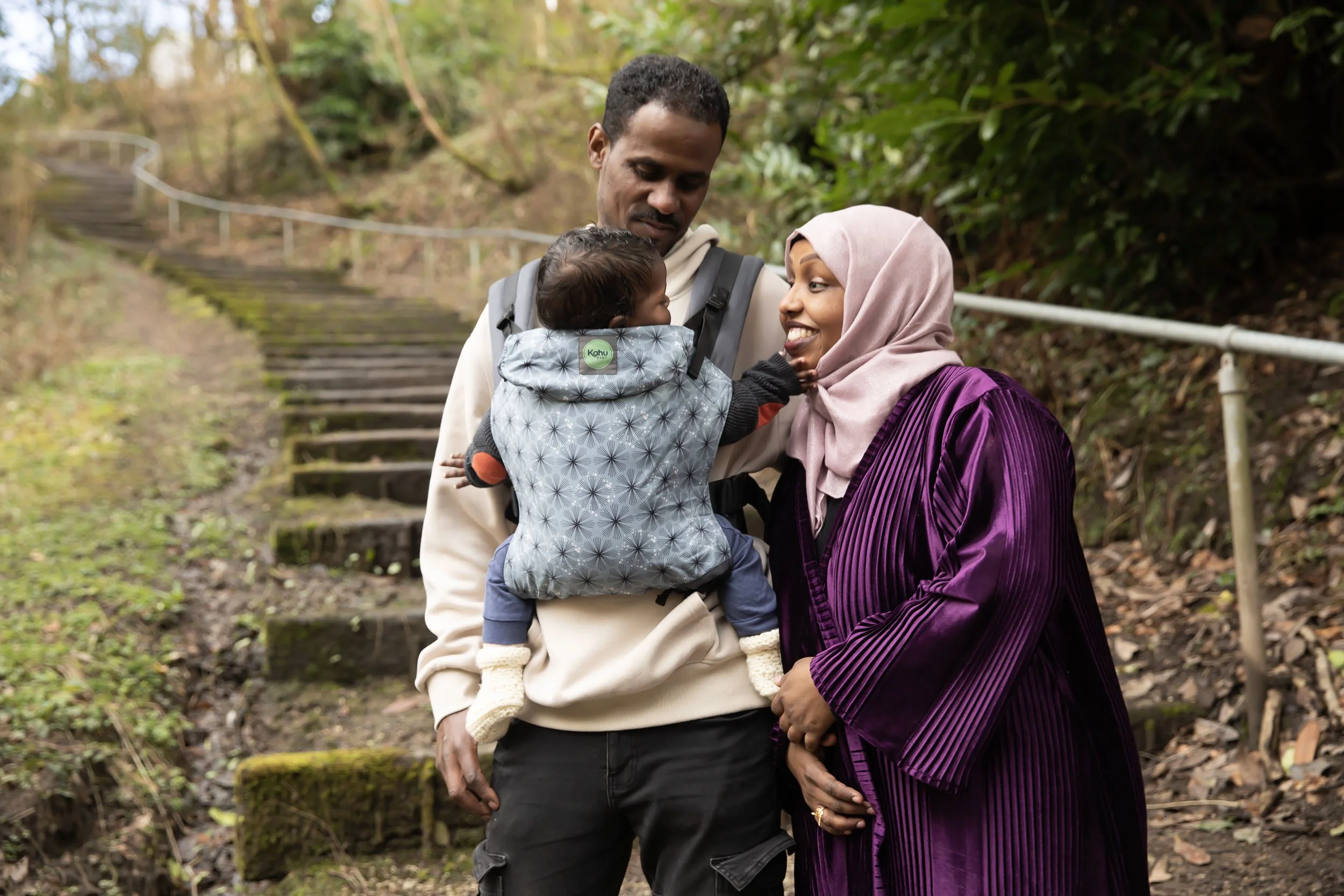
Design: A structured fabric panel, based on the Chinese meh dai, fastened with adjustable plastic buckles and straps that range from thickly padded to no padding at all. There is a huge variety in fit and features between different brands and models of buckle carriers.
Key Features: They mimic the familiar design of a backpack and are extremely simple to learn to use and quick to put on. While many designs can now be used to carry newborns, they usually come into their own from around four months onwards.
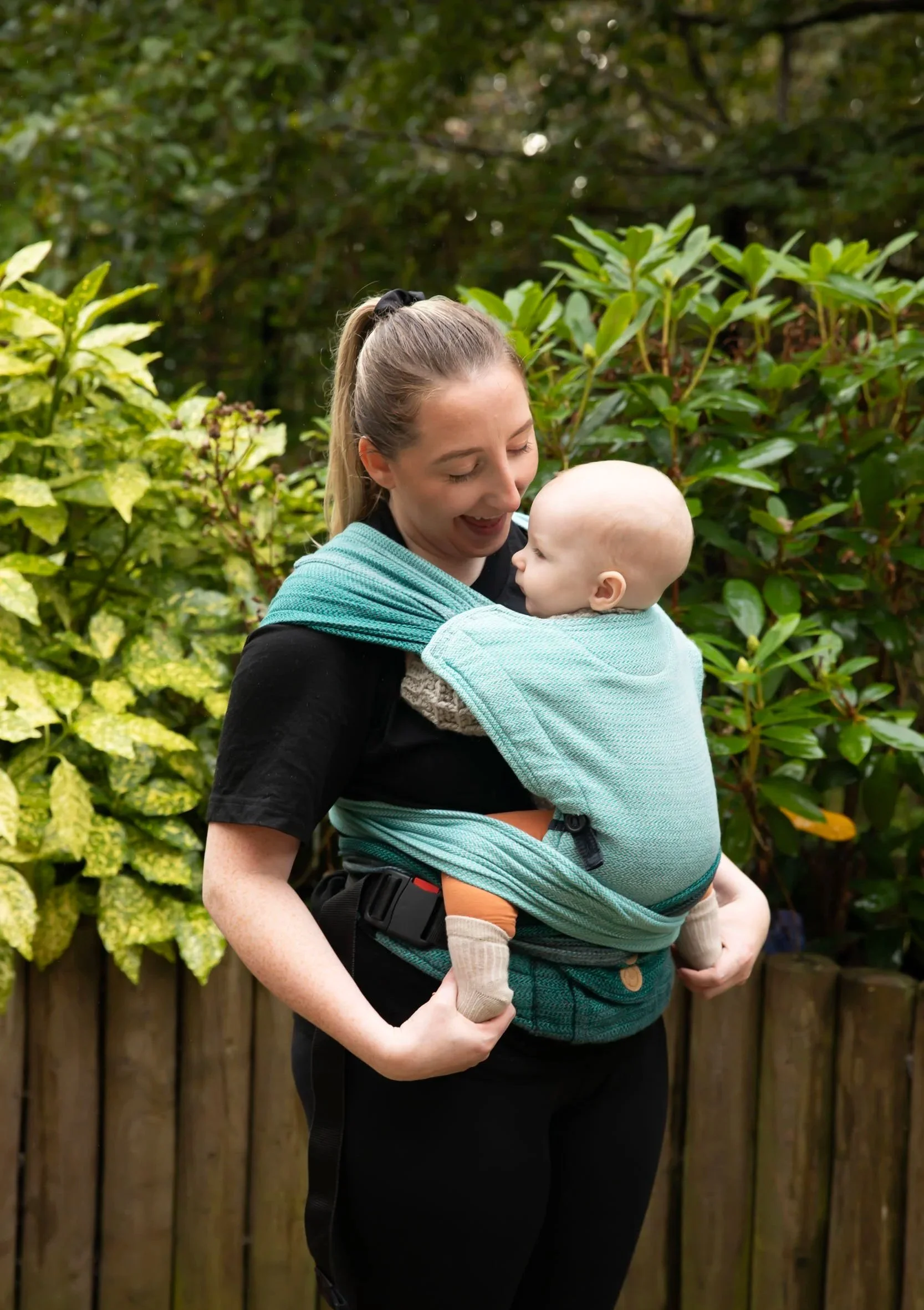
Half buckle Carriers
Design: A hybrid design featuring a structured waist belt that buckles, combined with long fabric shoulder straps that tie. There are also some less common combinations available, such as a tie waist and buckled shoulder straps.
Key Features: It bridges the gap between structured convenience and fabric customisation. You get the quick setup of a buckle carrier's waist belt, paired with the exact, snug, body-contouring shoulder comfort of a meh dai.
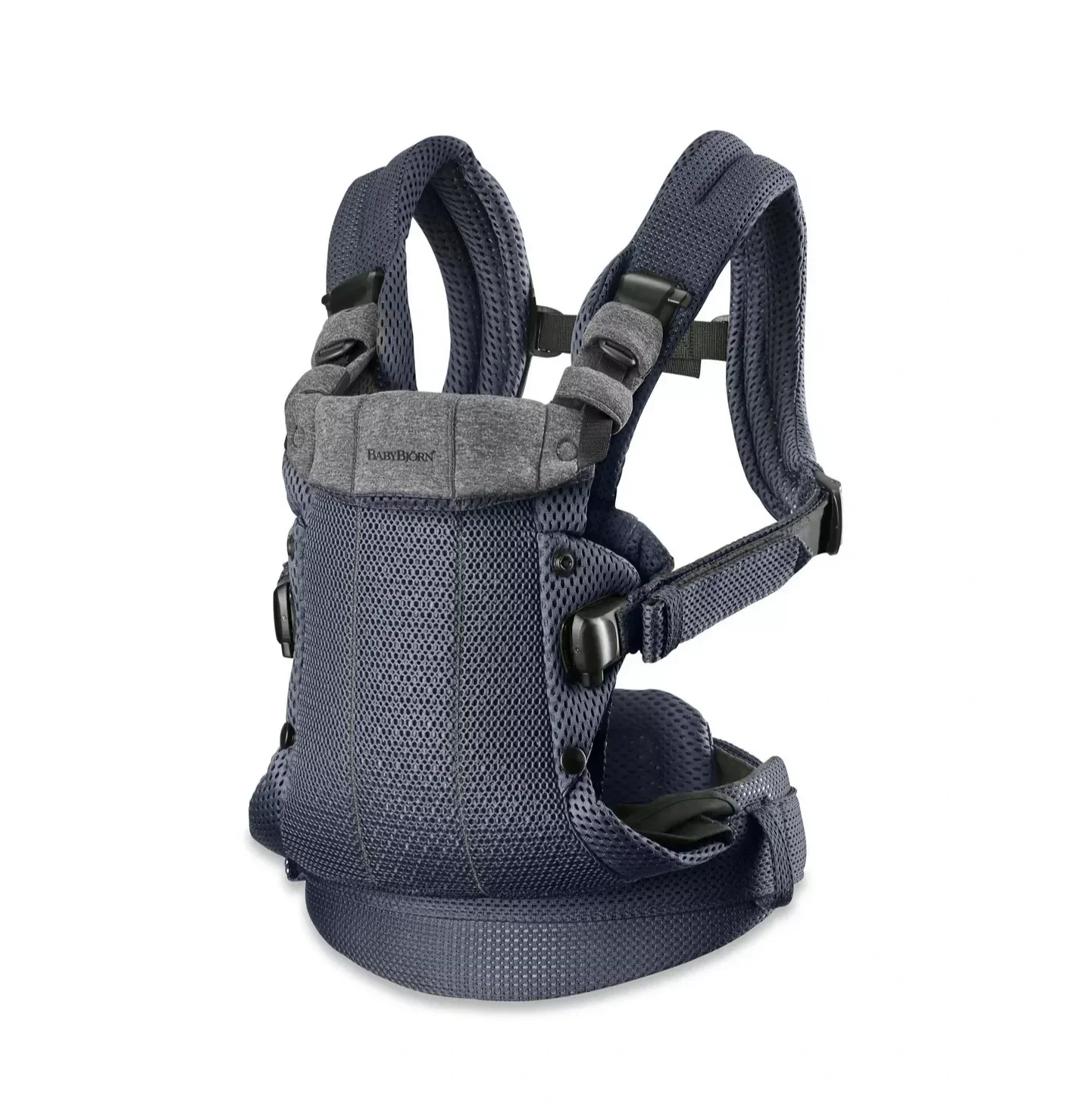
harness Carriers
Design: Usually a two part system where the parent wears a vest-like harness, and a separate seating pouch for the baby. On some models the harness and pouch are separate pieces and on others they are joined.
Key Features: The parent and baby sections often tighten separately, meaning getting a snug fit can be trickier. Many styles feature narrower bases that don’t adjust to fit baby knee to knee as they grow. Some families find them to be a good start to babywearing before moving onto other carrier types.

Quick Comparison
Expand the carrier types below to compare
-
Main Structure: Knit Fabric Wrap
Learning Curve: Low to Medium
Primary Positions: Front only
Best Used For: Wonderful comfort and security for newborns
-
Main Structure: Woven Fabric Wrap
Learning Curve: High
Primary Positions: Front, Back, Hip
Best Used For: Sturdy support, versatility, and longevity
-
Main Structure: Fabric with Rings
Learning Curve: Medium
Primary Positions: Hip and Front mainly. Back also possible
Best Used For: Quick trips, travel, and special occasions
-
Main Structure: Sized Fabric Tube
Learning Curve: Low
Primary Positions: Hip and Front
Best Used For: Quick up and downs with no adjusting needed
-
Main Structure: Panel with Waist & Shoulder Tie Straps
Learning Curve: Medium
Primary Positions: Front, Back, Hip
Best Used For: Comfort for long periods and easy sharing
-
Main Structure: Panel & Top Ties
Learning Curve: High
Primary Positions: Back
Best Used For: High back carries, toddlers
-
Main Structure: Panel (No Waist Belt)
Learning Curve: Medium
Primary Positions: Back
Best Used For: Toddlers, quick turnarounds, and pregnant wearers
-
Main Structure: Padded Panel & Buckles
Learning Curve: Low
Primary Positions: Front; parent facing & some models world facing, Hip, Back
Best Used For: Quick and easy to use
-
Main Structure: Hybrid Buckle Waist Belt & Tie Shoulder Straps
Learning Curve: Medium
Primary Positions: Front, Hip, Back
Best Used For: Tailored shoulder comfort with a secure buckle waist
-
Main Structure: Two Section Harness, sometimes separate pieces
Learning Curve: Medium
Primary Positions: Front; parent facing and world facing
Best Used For: Hands-free indoor tasks or short walks if preferred